
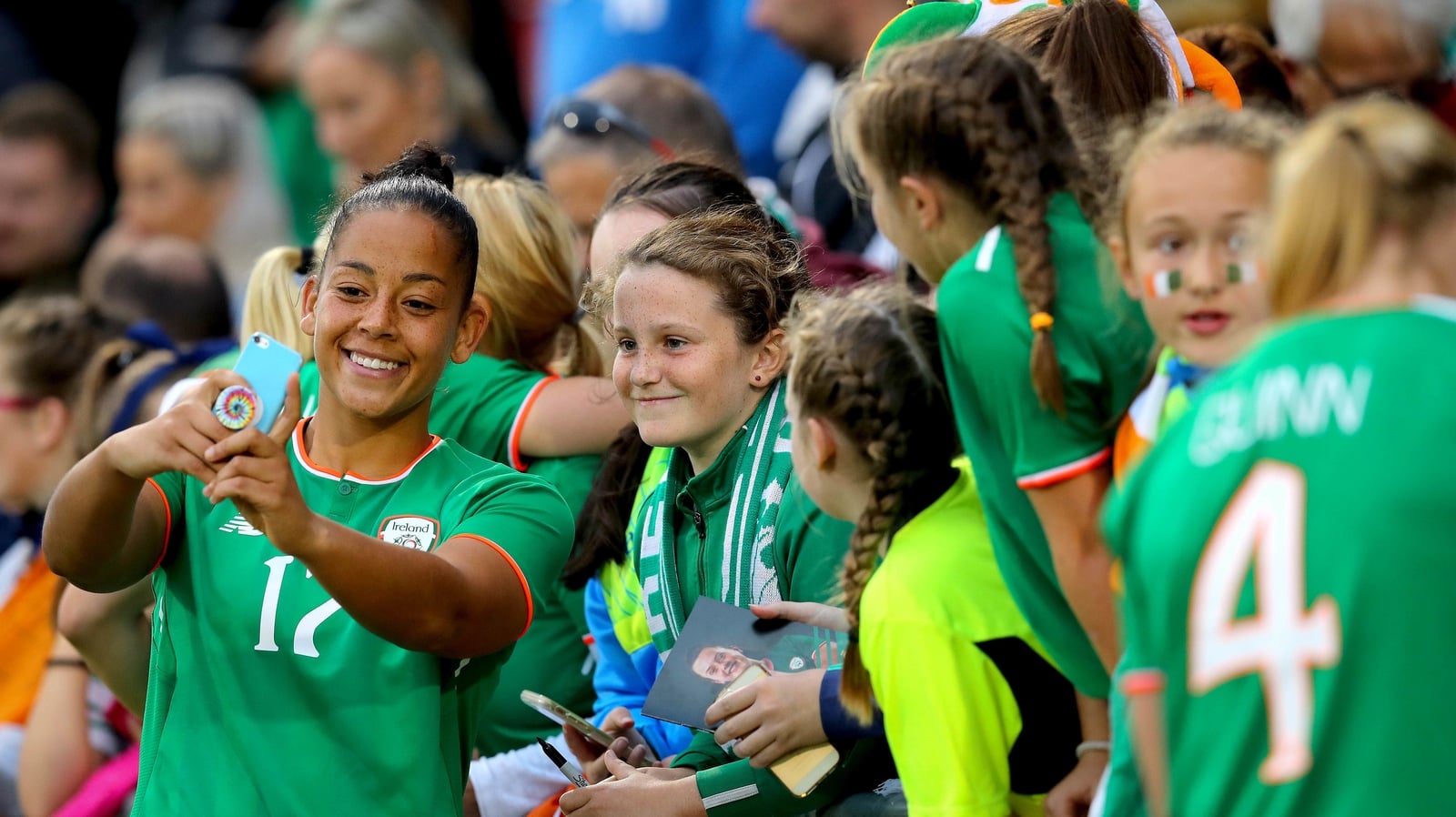
UEFA will launch their #weplaystrong campaign in the Republic of Ireland next year, after a successful year of helping to grow and develop women’s soccer across Europe.
The social media campaign is aimed at promoting and encouraging the women’s game across the continent and in keeping young girls and teenagers within the game.
Organisers have had high profile support from both female and male soccer stars, along with celebrities such as Rita Ora and initial results have been encouraging.
The number of people following women’s football online and watching on television has grown, along with the profile of the game as more people begin to tune in and become aware of the Women’s Champions League along with international competition.
Speaking at the Business for Sport Women in Irish Sport conference, which was held at RTÉ Studios, UEFA business developer Polly Bancroft explained the thinking and aims behind the campaign and how they are targeting parents and in particular fathers, to help encourage their daughters to get involved in soccer.
[embedded content]
“We know women’s football had an image problem,” Bancroft said. “It wasn’t perceived to be cool, it was perceived to be a masculine sport, there was no interest or awareness of women’s football so there was quite a lot of problems or challenges that we had to overcome.
“We have to try and improve the image of football. Rather than 10, 20 years ago or even currently, women running around in men’s shirts on terrible pitches, we need to improve the image and bring us more up to date.
“It also needs to be seen on social media. We also have to have influencers activating around women’s football as well which is the space teenage girls currently are, so it’s all about trying to uplift the whole image of the game.
“This isn’t UEFA on its own, this isn’t the national associations on their own, it’s not broadcasters, it’s not just commercial partners. This is everybody together, it’s how can we use a combined approach to improve this?”
Bancroft believes that rather from suffer by comparison to the men’s game, that women’s soccer can carve out its own identity and place within the public consciousness and pointed to the success of the English and Dutch national teams in recent times.
“Some of the work, whether it’s the Lionesses of the Orange Lionesses in the Netherlands, they’re looking at building an identity for their national teams and I that the FAI are looking at doing something similar here as well.
“It’s trying to make those teams stand out. What is their unique proposition? What is their unique selling point and how are they different from the men’s teams?
“It’s the same sport but they do have unique qualities that we can bring to the fore,” she insisted.
For Bancroft the language around soccer is crucially important and she pointed out how something as seemingly minor as the different terminology between men’s and women’s teams could diminish the women’s game in the minds of casual observers.
“Personally one of my biggest bugbears is that we have ‘football’ and ‘women’s football’,” she said. “Why don’t we have women’s football and men’s football or just football in total?
“The US are doing that already. They already have their men’s national teams across sport and then they have their women’s national team, so there are countries that are doing it.”
It’s worth noting that Ireland are one of those countries, with the FAI referring to the national sides as the Men’s National Team (MNT) and Women’s National team (WNT), a small but perhaps significant step towards equality for the two teams.
The language around the campaign was also something that UEFA and Bancroft agonised over and she revealed that while #weplaystrong is being positioned as a continent-wide movement, the people behind it have had to tweak the campaign slightly for individual markets and countries.
“The FAI will be launching a version of this campaign domestically next year so we’re looking forward to working with them on that and the IFA have embedded in their strategy, in their work with Electric Ireland as well. So we’re working our way through the federations to make it bespoke and suitable for each market.
“We did test the word ‘strong’ which in eastern Europe might have had connotations of muscly or too fierce but actually it’s strength of mind, strength of confidence, character – if you get knocked down can you get back up again?
“The ‘together’ and the ‘we’ is the sense of the girls wanting to develop social skills and being part of a friendship ground and having fun. The play is the skill.”
That ‘playing’ step is the biggest challenge facing the campaign however and getting young girls to view soccer as worthwhile pastime and then keeping them playing into their teenage years is where the campaign’s main focus is.
To that end, UEFA are squarely targeting fathers in an attempt to encourage their daughters to get involved in the game and to give the girls the same opportunities to attend matches and to play as their sons are offered.
Bancroft said: “Some of the reasons that girls don’t play football, the first is opportunity and access to facilities as well but also parents taking their daughters, particularly dads taking their daughters to the football, wasn’t happening on the same scale.
“They would take their boys or their sons, so really the girls have fewer opportunities but also at the times they are taken to football, it’s at a much stage to when the boys get their opportunity to go.
“So when the girls do arrive and they’re maybe against the boys who have already had multiple times or opportunities to play, they think ‘well I’m rubbish, I can’t do this’. That’s not the case, it’s because they haven’t had so many opportunities to play.
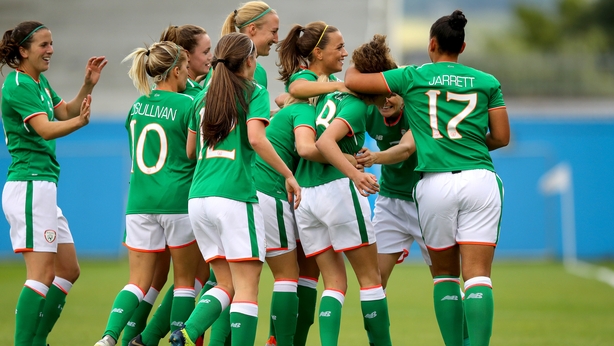
“So really some of the campaign speaks to parents, it speaks to adults to say ‘come on, take your daughter to football alongside with your son’.
“There is that perception that they’re not as good which we have to get rid of. Also girls will hear ‘oh football, it’s not for you, it’s a boy’s sport’, so they’re hearing that around the playground so that has to change.
“Together We Play Strong is aimed at a teenage audience and as we know teenagers drop out of sport at an alarming rate. They’re dropping out at the time that they need it most, so when they’re hitting puberty and dropping in confidence levels, if they stay in the game, they can improve their confidence.”
With fitness levels dropping and obesity and sedentary lifestyles rising across the nation at an alarming rate, UEFA and the national sporting bodies have their work cut out for them, but Bancroft is already encouraged by what she’s seen in the 16 months since the campaign launch.
“The perception of women’s football being ‘cool’ has increased from 12% to 25% so we’re doing quite well in that respect,” she said. “The number of people following women’s football online and on television has increased as well… so it’s a good start but there’s still plenty to do.”
With the increased profile of Ireland Women’s National team along with the steady growth of the Continental Tyres Women’s National League and the exploits of Irish teams in European competition, there’s the feeling that a groundswell movement is taking place within Irish women’s soccer at the moment.
When #weplaystrong launches in Ireland next year it will do so in an environment which appears to be beginning to take women’s soccer seriously.
Hopefully the days of players having to threaten strikes to ensure they don’t have share tracksuits and get changed in toilets is over, and the actions of players like Stephanie Roche, Emma Byrne and Aine O’Gorman has not only given young girls players to look up to, but something to aspire to.
Be the first to comment